
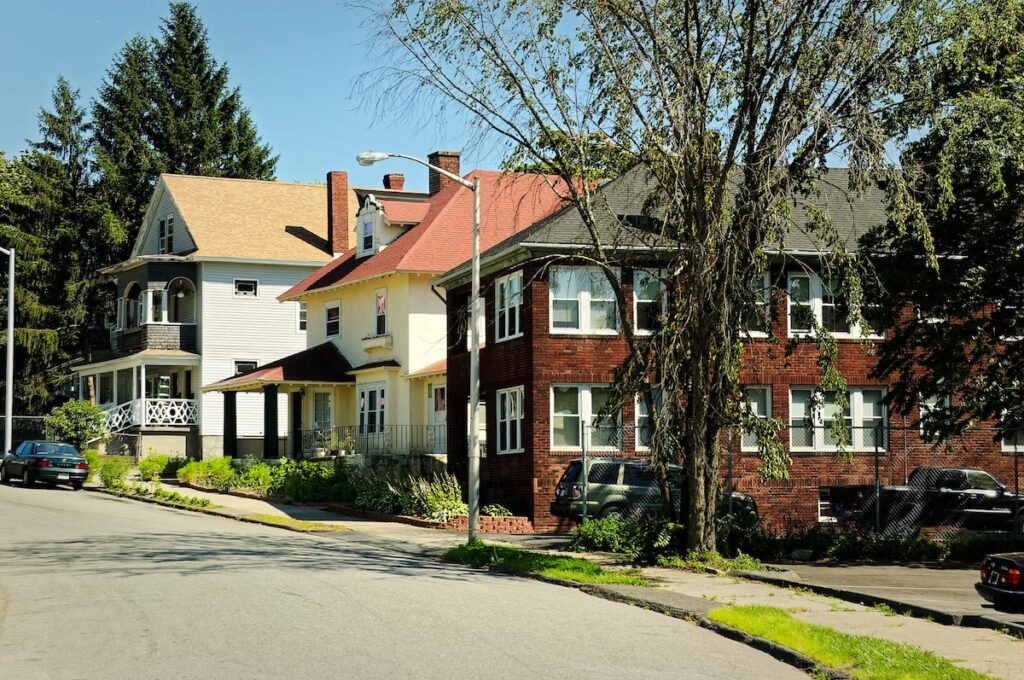
The homes that make New Jersey’s best towns worth living in are rarely new. The center-hall colonials in Montclair, the older suburban homes in Verona and the Caldwells, the established neighborhoods in Westfield and Morristown — a lot of that housing stock has been standing for decades. That character is exactly why people buy these homes and then call a contractor to make them work for the way they live now.
Here’s the part most homeowners don’t think about until someone brings it up: if your home was built before 1978, there’s a real chance it contains lead-based paint. And the moment a renovation disturbs that paint — opening a wall for an addition, gutting a bathroom, replacing old windows — that becomes something your contractor needs to be trained and certified to handle safely.
This isn’t a reason to panic, and it’s not a reason to put off a project you want. It’s a reason to hire carefully. Here’s what lead-safe certification actually means, why it matters for your family, and how to make sure the contractor you bring into your home is doing it right.
Why Older NJ Homes Are the Concern
Lead-based paint was banned for residential use nationally in 1978. New Jersey actually got there earlier — the state banned it back in 1971. But the ban only stopped new use. It did nothing about the millions of homes already coated in it.
And New Jersey has a lot of those homes. More than 30% of the state’s housing was built before 1950, and every single county in New Jersey has more than 9,000 housing units built before 1950. The older the home, the higher the likelihood — homes built before 1960 carry the greatest risk, because the paint used in that era contained the highest concentrations of lead.
The towns where we do most of our work skew older and more established by design. That’s where the additions, the primary-suite renovations, and the whole-home remodels happen. Which means lead-safe practices aren’t an edge case for us — they’re a normal part of working on the homes our clients own.
What the Lead-Safe Rule Actually Is
The federal rule is called the Renovation, Repair and Painting (RRP) Rule, and the EPA enforces it. In plain terms: anyone paid to do work that disturbs paint in a home built before 1978 has to be certified and has to follow specific lead-safe procedures.
The threshold that triggers it is lower than most people expect. Certification requirements kick in for any renovation that disturbs more than 6 square feet of painted surface on the interior, or more than 20 square feet on the exterior. That’s not a major demolition — that’s a normal afternoon on most projects. Opening a wall, removing trim, cutting in for a new HVAC zone, taking out old windows. If your home is older, the rule almost certainly applies to the kind of work you’re planning.
There are two layers to it, and both matter. The individual doing or supervising the work has to be a certified Lead Renovator. And the company itself has to be a certified firm. A contractor who has one but not the other isn’t fully covered — and a firm that isn’t certified at all can’t legally advertise or perform this work in a pre-1978 home.
Why It Matters for Your Family
The reason the rule exists is straightforward. When lead paint is disturbed by sanding, cutting, or demolition, it creates fine toxic dust that can settle on floors and surfaces and be inhaled or ingested. You can’t always see it, and it doesn’t clean up with a regular vacuum and a wipe-down.
For a household with young kids, that’s the whole ballgame. Lead exposure is most dangerous for children under six. This is the part of the job that doesn’t show up in the finished photos — but it’s the part that determines whether your family is safe living in the house while the work happens and after it’s done.
A contractor who treats this casually is making a decision about your family’s health on your behalf. That’s not a decision we’re comfortable leaving to chance, and it’s not one you should have to.
What a Lead-Safe Contractor Does Differently
This is where certification stops being a piece of paper and starts being a process. A properly run lead-safe job looks different from an ordinary one, start to finish:
Before the work begins, you get the EPA’s “Renovate Right” lead-hazard pamphlet, and the contractor keeps a record that you received it. That’s not a formality — it’s the rule’s way of making sure you’re informed before anyone picks up a tool.
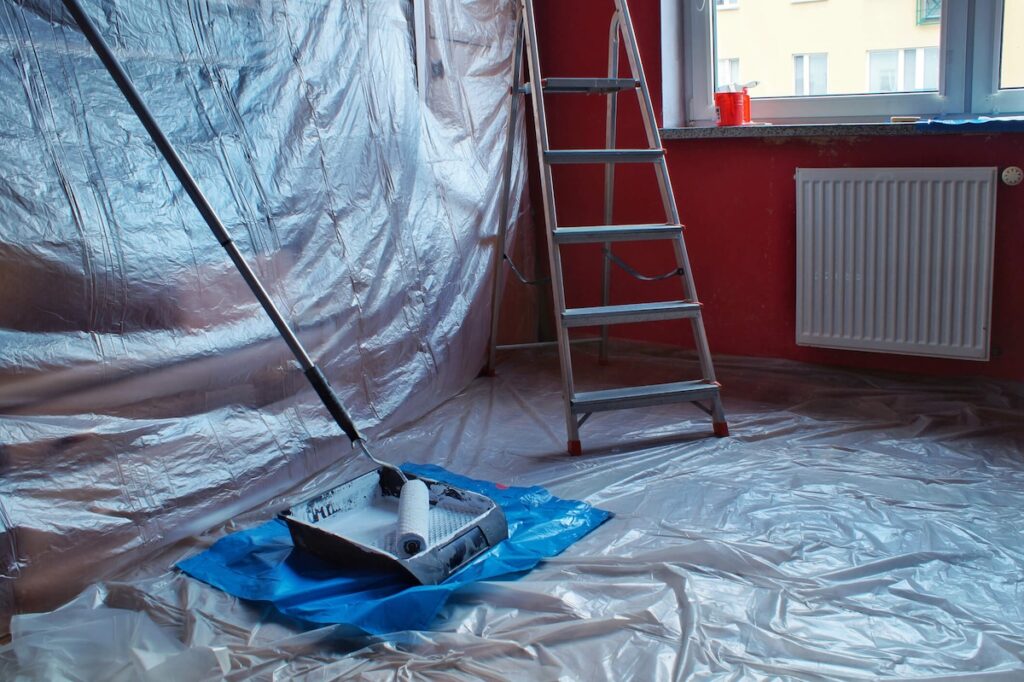
During the work, the crew contains the area. That means sealing off the work zone with plastic sheeting, closing and covering vents and doorways, and working in a way that keeps dust from drifting into the rest of your home. Debris stays contained. The crew works to minimize the dust in the first place, not just clean it up after.
Cleanup is its own phase. Lead-safe work uses HEPA-filter vacuums and a specific cleaning protocol — not a shop vac and a broom, which can actually spread fine lead dust rather than remove it.
After the work, the contractor performs cleaning verification to confirm the space is genuinely clean, and documents that the proper procedures were followed.
If that sounds like the same disciplined, no-surprises approach we bring to everything else — the itemized proposals, the clear communication about what’s included and what isn’t — that’s because it is. Lead-safe work is just that same standard applied to the part of the job you can’t see.
The Part Most Homeowners Don’t Know
The stakes for getting this wrong are real, and they’re not just yours. Under the RRP Rule, non-compliance can carry EPA fines of up to $48,762 per violation, per day. A firm that isn’t certified can’t even legally advertise covered renovation work on a pre-1978 home, let alone perform it.
So when an uncertified contractor offers to do your older-home renovation, you’re not just risking lead exposure. You’re inviting a contractor onto your property who is, by definition, operating outside the rules. That tells you something about how they’ll handle the rest of the job, too.
How to Vet a Contractor for an Older Home
If your home predates 1978, here’s a short list to run any contractor through before you sign anything:
- Ask for proof of certification — both kinds. Request a copy of the firm’s EPA Lead-Safe Certified Firm certificate and the Lead Renovator training certificate of the person who will oversee your project. A certified contractor will hand these over without hesitation.
- Ask how they’ll contain dust and verify cleanup. A real answer involves plastic sheeting, sealed-off work zones, HEPA vacuums, and post-work verification. A vague answer is its own answer.
- Ask for references from recent jobs in older homes. Anyone working lead-safe regularly will have pre-1978 projects to point to.
- Read the proposal. Lead-safe work and disposal should appear as real line items, not get buried or skipped. If you’re not sure what you’re looking at, our guide on how to read a contractor proposal walks through exactly what a complete one includes.
The contractor who answers all of these comfortably is the one you want in your home. The one who gets cagey is telling you what you need to know.
Where Temprano Stands
We work on exactly these homes, in exactly these towns — and we’re certified to do it the right way.
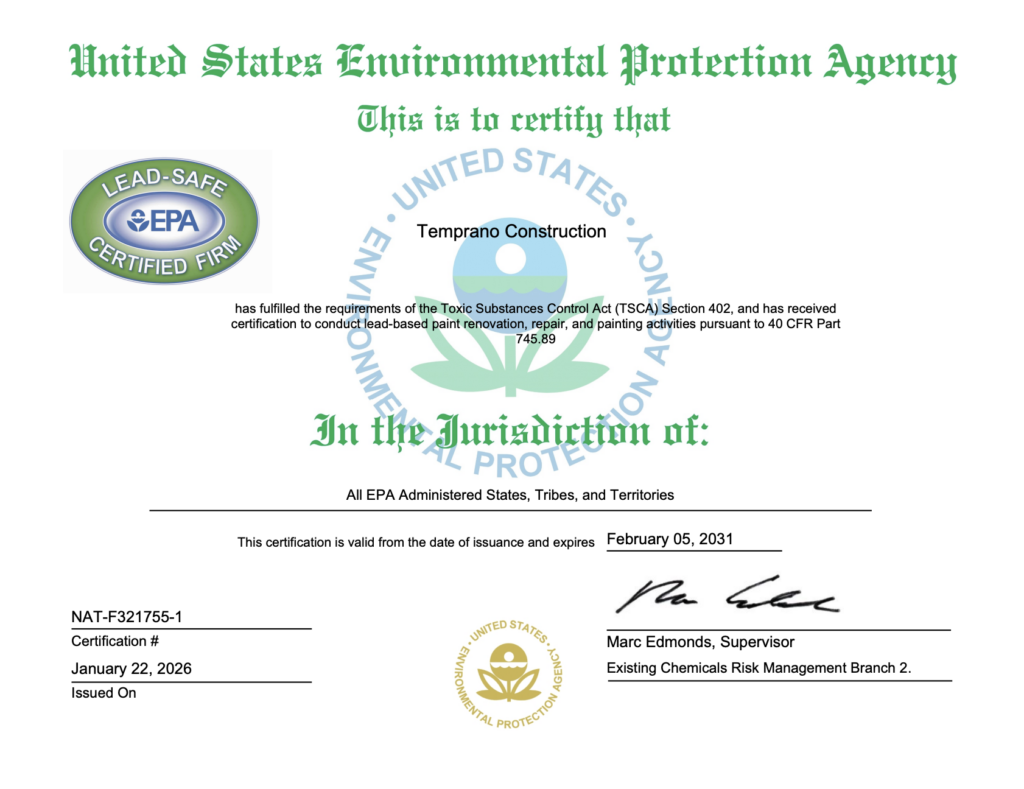
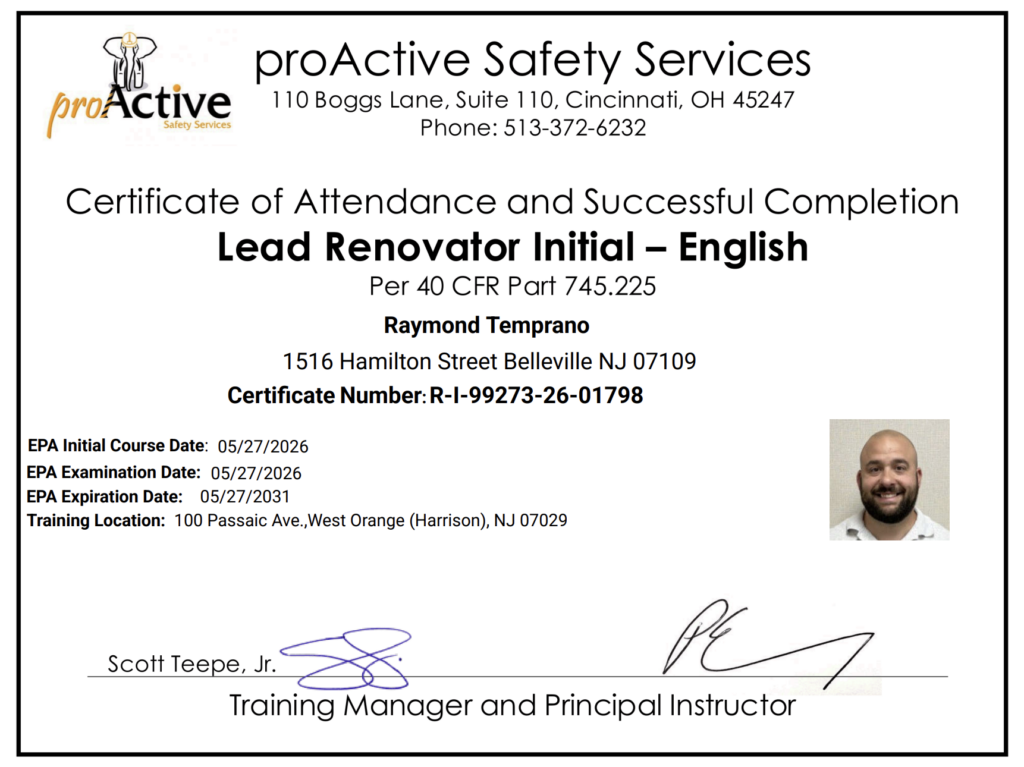
Temprano Construction is an EPA Lead-Safe Certified Firm (Certification #NAT-F321755-1), and Ray is a certified Lead Renovator.
That certification sits alongside our New Jersey general contractor license (#13VH11462700) as part of how we operate: licensed, insured, and accountable for what happens on your property. (Our EPA certification is for purposes of Section 402 of TSCA, the federal lead-safe renovation rule.)
If you’re in Northern New Jersey — Essex, Bergen, Morris, Union, or Somerset County — and you’re planning an addition or a remodel on an older home, reach out for a free estimate. We’ll walk the site, talk through what you want to accomplish, and give you a clear, itemized number you can actually use — with the lead-safe piece handled the way it should be from day one.
Frequently Asked Questions
How do I know if my home has lead paint? If your home was built before 1978, assume there’s a chance it does — and the older the home, the higher the likelihood, especially for homes built before 1960. The only way to know for certain is testing, but for renovation purposes, a lead-safe contractor treats a pre-1978 home as if lead is present unless it’s been confirmed otherwise.
Is lead-safe certification actually required by law, or is it optional? It’s required. For any paid renovation that disturbs more than 6 square feet of interior paint (or 20 square feet of exterior) in a pre-1978 home, the contractor and the firm must be EPA-certified and follow lead-safe work practices. It’s federal law, not a nice-to-have.
Does working lead-safe cost more? There can be modest added cost for containment materials, HEPA equipment, proper cleanup, and lead-safe disposal — and a good contractor will show it as a clear line item rather than hiding it or skipping it. Weigh that against the alternative: the health risk to your family and the liability of hiring someone working outside the rules. It’s a small price for doing the job correctly.
My project is small — does the rule still apply? Probably, yes. The threshold is low. Even a modest bathroom demo or a window replacement on an older home will usually disturb more than 6 square feet of paint, which puts it squarely under the rule.