
You’ve decided you need more space. You’ve ruled out moving — because in Northern New Jersey right now, moving means either downsizing your neighborhood or blowing your budget on something that still needs work. So an addition is on the table.
Then you start researching and immediately hit a fork in the road: add a second level, or push out the back?
Both are legitimate paths. Both can add significant square footage and real value to your home. And both require a general contractor who knows what he’s doing, because the structural and permitting complexity of a home addition is not the place to figure things out as you go.
Here’s how we think about this decision — and the questions that usually point homeowners toward one option over the other.
What’s the actual difference?
An add-a-level addition (also called a second-story addition or add-a-level) involves building a new floor on top of your existing home — or on top of a portion of it. You’re working vertically: new framing, new roof, new structural load path, new staircase. The footprint of your house stays the same; the livable square footage roughly doubles whatever floor you’re adding above.
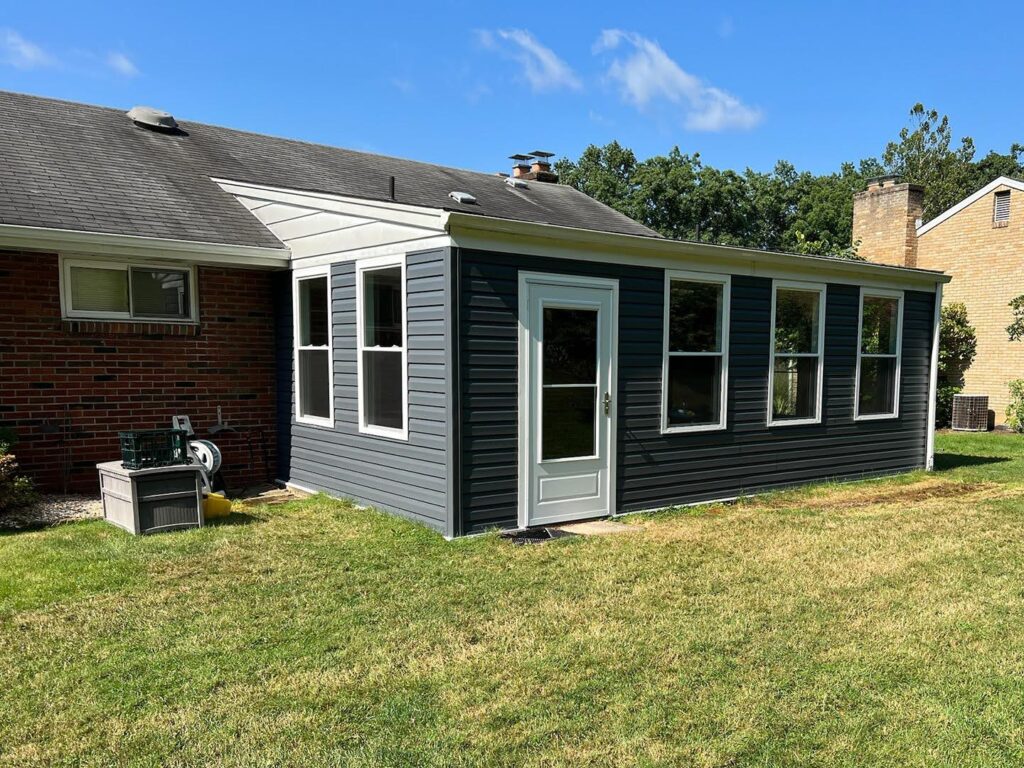
A rear addition pushes your home’s footprint outward — typically off the back of the house, though side additions follow similar logic. You’re working horizontally: new foundation, new framing, new roof section. You connect the new space to the existing floor plan through an opening in what used to be an exterior wall.
Both approaches require permits. Both involve significant structural work. And both will meaningfully disrupt your home during construction — which is worth planning for upfront, not discovering mid-project.
The lot question comes first
Before anything else — before floor plans, before budget discussions — you need to know what your lot allows.
In Northern New Jersey, many municipalities have strict rules around setbacks (how close a structure can come to property lines), lot coverage (what percentage of the lot a building footprint can occupy), and impervious surface (how much of your lot can be covered by hard surfaces like roofs and driveways).
If your lot is tight — a common reality in towns like Verona, Cedar Grove, or parts of Morristown — a rear addition may simply not be possible at the scale you need. You might be able to add 200 square feet before you hit a setback line, when you actually need 600.
In that case, going vertical is often the only way to get the square footage you want without buying the neighbor’s property.
On the other hand, if you have a generous lot and meaningful rear yard, a ground-level extension can be more straightforward to permit and often easier to tie into existing living spaces.
This is why talking to an architect early matters. They can pull your lot survey, check your municipality’s zoning requirements, and tell you what’s actually buildable before you fall in love with a floor plan that won’t fly through planning.
Your existing structure changes the math
Not every house is a good candidate for a second story.
Ranches and split-levels are the most common candidates for add-a-level additions in this part of New Jersey — and for good reason. A ranch’s single-story frame is straightforward to build above. A split-level can often have its upper section extended or a full second floor added over the lower section.
Two-story colonials are a different story. If you already have a second floor, adding a third level is rare and involves different engineering entirely. For these homes, a rear addition is often the better path if you need more space — particularly for expanding a first-floor kitchen or family room, or adding a main-level primary suite.
Older homes — and there are plenty of them across Essex, Morris, Union, and Bergen counties — sometimes have foundations, floor systems, or load-bearing walls that weren’t designed to carry a new floor above. A structural engineer needs to assess this before you commit to a design. Surprises at the structural level are expensive to address mid-project.
What each type typically adds
Add-a-level is well-suited for:
- Families who need bedrooms — a second story is the most efficient way to add two, three, or four bedrooms without consuming yard or first-floor living space
- Homes on smaller lots where a rear push isn’t feasible
- Ranch homeowners who want to double their livable footprint
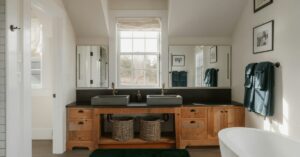
- Primary suite additions — we frequently build master bedroom/bathroom suites as part of second-story work; it’s one of the strongest projects for both livability and resale value in this market
Rear additions are well-suited for:
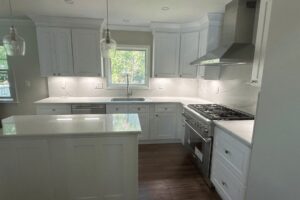
- Open-concept kitchen and living expansions — pushing out the back is the natural way to create the connected kitchen-family room-dining space that buyers want in Northern NJ
- Main-level primary suites — ideal for homeowners who don’t want to use stairs long-term, or who want to age in place
- Sunrooms and flex spaces — a rear addition with large windows or a connection to an outdoor living area
- Homes where second-story framing isn’t structurally practical
The honest answer is that many families end up doing one or the other based on what their house allows — not purely what they’d prefer. That’s not a bad outcome; it’s just the reality of building on an existing structure.
What it typically costs
Both approaches fall in the same general range for Northern New Jersey construction: roughly $200 to $400 per square foot, depending on scope complexity and material quality. That range reflects licensed, permitted work with full architectural drawings and proper inspections — not a number pulled from a national estimating tool that doesn’t account for NJ labor and permitting costs.
A few nuances:
Add-a-level additions often involve more structural engineering, temporary weatherproofing during the period when the roof is off, and a staircase that has to fit meaningfully into an existing floor plan. (Our phase-by-phase walkthrough covers what that roof-off window is like to live through.) If the existing structure needs reinforcement to carry the new load, that adds cost.
Rear additions require a new foundation — either a full basement, crawl space, or slab — and the cost of that foundation varies. You’re also opening an existing exterior wall to connect to the addition, which involves its own structural work.
Neither is reliably cheaper than the other at the same square footage. The honest conversation about cost happens after we understand your specific structure, lot, and goals.
What to expect during construction
This is the part most contractors skip over in their marketing, and homeowners wish they’d understood earlier.
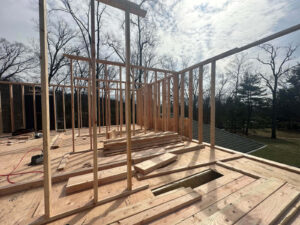
For add-a-level additions: There is typically a phase — often a week to two weeks — where the roof comes off and the new framing goes up. That period requires careful weatherproofing and realistic planning. Depending on the scope, some families find it practical to temporarily relocate for that phase rather than stay in the house. We work through this expectation upfront in our proposals, not after the contract is signed.
For rear additions: The disruption tends to be more contained to the back of the house. However, the phase when an exterior wall is opened to connect the new space to the existing floor plan is legitimately disruptive. Plan for dust, temperature variation, and limited access to that part of the house.
Permit timelines add another layer. Municipalities across Northern NJ vary significantly in how quickly they process addition permits — some move in weeks, others in months. That timeline is outside our control and outside any contractor’s control. We set that expectation clearly at the start of every project because we’ve seen homeowners surprised by it, and surprises like that are frustrating for everyone.
Do you need an architect before calling a GC?
Not necessarily — but it helps, especially for additions.
If you already have architectural drawings and a permit-ready set of plans, we can move faster. If you don’t, we can connect you with architects we work with regularly across Northern NJ — people whose work we trust and who understand how to design for the way we build.
What we’d steer you away from: waiting until you have perfect plans before having a conversation. A short initial discussion about what your house is and what you’re trying to accomplish can save a lot of time — and occasional heartbreak — before you invest in a full architectural set for an addition that won’t clear zoning.
The short version
| Add-a-Level | Rear Addition | |
| Best for | Bedrooms, primary suite, small lots | Kitchen/living expansion, main-level suite, flex space |
| Lot requirement | Stays within existing footprint | Needs available rear yard within setbacks |
| Structural complexity | Existing structure must support new load | New foundation required |
| Disruption | Higher during framing/roofing phase | Contained to rear/connection phase |
| Cost range (NJ) | ~$200–$400/sq ft | ~$200–$400/sq ft |
| Permitting | Required; timeline varies by municipality | Required; timeline varies by municipality |
What’s the right answer for your home?
It depends on your lot, your house, your goals, and your budget — and the only way to know for certain is to look at your specific situation.
Temprano Construction handles both types of additions across Northern and Central New Jersey. We work with homeowners at every stage: some come to us with architect plans in hand, others are still figuring out what’s feasible. Either way, we’ll give you a straight answer about what works and a detailed, itemized proposal that tells you exactly what you’re buying.
If you’re in Essex, Morris, Union, Bergen, or Somerset County and thinking about an addition, reach out. We’re happy to have the conversation.