

If you’re searching this question, you’re past the dreaming stage. You have a house that doesn’t quite fit your life anymore, and you’re trying to figure out whether an addition pencils out before you commit to anything.
Here’s the direct answer: most home additions in Northern New Jersey run $200–$400 per square foot, depending on materials, scope, and the type of addition you’re building. A full second-level addition on a split-level in Bridgewater lands differently than a bedroom bump-out in Morristown. This guide breaks down what drives the difference — and what to watch out for when you’re collecting estimates.
The Short Answer
These are contractor-built figures — labor, materials, permits, and project management included. They don’t include design fees, structural engineering, or furniture.
| Addition Type | Typical Range (NJ, 2026) |
|---|---|
| Room addition / first-floor expansion | $200–$400 per sq ft |
| Second-level / add-a-level | $200–$400 per sq ft |
| Master suite addition | $200–$400 per sq ft |
| Ground-up new construction | $300–$600 per sq ft |
A 1,000 sq ft addition at $225/sq ft is a $225,000 project. That’s a real number, and a competent GC should be willing to say it out loud at the first conversation.
What Drives Addition Cost in NJ
Square footage is the starting point, not the full story. Here’s what actually moves the number.
1. Addition Type and Structural Complexity
A rear first-floor addition involves foundation work, tying into the existing structure, and extending the roofline. A second-level addition — adding an entire floor above the existing footprint — involves structural reinforcement of the existing frame, a new floor system, new exterior walls, new roof, and full mechanical integration (HVAC zone, electrical subpanel, plumbing if a bath is included).
Both can land in the same per-square-foot range, but the second-level is almost always a more complex project. The complexity is reflected in timeline and in what’s included, not necessarily in a higher cost-per-foot — which is why itemized proposals matter.
2. Material Selection
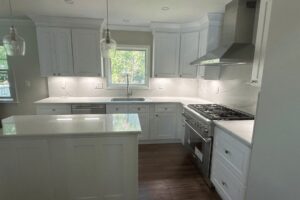
Within the $200–$400/sq ft range, materials are the biggest variable. A master suite with luxury tile, a steam shower, and custom millwork sits at the top of that range. A simpler addition with standard finishes sits toward the bottom. Neither is a corner-cut — the craftsmanship standard holds either way.
For specialty materials — custom windows, out-of-state sourced stone, specific flooring — the proposal adjusts to reflect actual cost. That’s not a surprise; it’s a scope conversation.
3. Permit and Municipal Requirements
Every New Jersey municipality has its own permitting process, setback rules, and inspection cadence. Some building departments in Essex and Morris counties move reasonably fast. Others do not. This is outside the contractor’s control, and any GC who quotes a hard delivery date without factoring in permit timelines is either guessing or telling you what you want to hear.
Budget for permit fees as a line item in your total project cost. Your contractor should pull them — if someone offers to “skip permits” to save money, that’s a different conversation.
4. Existing Conditions
Additions tie into existing homes. If the existing structure has moisture issues, undersized electrical service, aging HVAC, or non-standard framing, those get addressed during the project. This is why a site walkthrough before an estimate isn’t a formality — it’s how a contractor catches what the quote needs to actually cover.
Addition Types and What to Expect
Second-Level / Add-a-Level Additions
This is the most ambitious addition type and, for the right house on the right lot, often the best value for space gained. You’re not consuming yard, you’re building up.
What’s involved: Structural engineering review to confirm the existing walls and foundation can carry a second floor. New floor system, exterior framing, windows, roofline, insulation, and full mechanical integration. If you’re adding a full bath, expect rough plumbing and a subpanel.
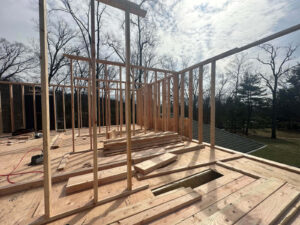
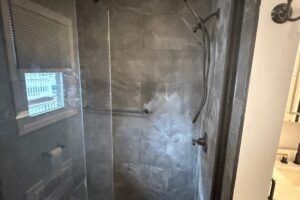
What to plan for: Timeline measured in months, not weeks. An active add-a-level in Bridgewater — a 1,000 sq ft master suite addition — took six days of framing alone before finish work began. The full scope includes a new HVAC zone, full electrical, a primary bath with steam shower, and a subpanel. That’s a proper project.
Who it’s right for: Families who need meaningful square footage, especially in Northern NJ towns where lot coverage restrictions limit building out.
Master Suite Additions
The most common first-floor addition we build. Typically a primary bedroom, walk-in closet, and full bath — often with a soaking tub, separate shower, double vanity, and a private water closet.
What’s involved: Foundation and framing, roofline extension, full interior finish, plumbing rough-in for the bath, and electrical. A recent Morristown project included a 15×15 primary bath with soaking tub, separate shower, private water closet, linen closets, and a new vanity.
Who it’s right for: Empty nesters upgrading their primary suite; families whose master bath hasn’t kept up with the rest of the house.
Room Additions and Multi-Room Expansions
Expanding a kitchen into a new breakfast room, adding a family room off the back, building out a home office — these are flexible in scope and often the entry point for larger projects that evolve during planning. If you’re hiring for a one-room project, our guide to room addition contractors in NJ covers the three places single-room additions go wrong.
What’s involved: Varies significantly by scope. A simple square addition is more straightforward than an L-shaped expansion that ties into multiple existing walls. Structural changes (removing a load-bearing wall, for instance) require engineering and add to both cost and timeline.
Garage Conversions
Converting an attached garage into conditioned living space — a home office, gym, playroom — is a popular project because the shell is already there.
What’s involved: Insulation, flooring, drywall, HVAC extension, electrical. Egress windows that meet code for habitable space are often required and can surprise homeowners who didn’t plan for it.
What it’s not: A full structural addition, which is why garage conversions often come in below the standard per-sq-ft range. Get an itemized estimate either way.
A Real Project: Bridgewater Add-a-Level
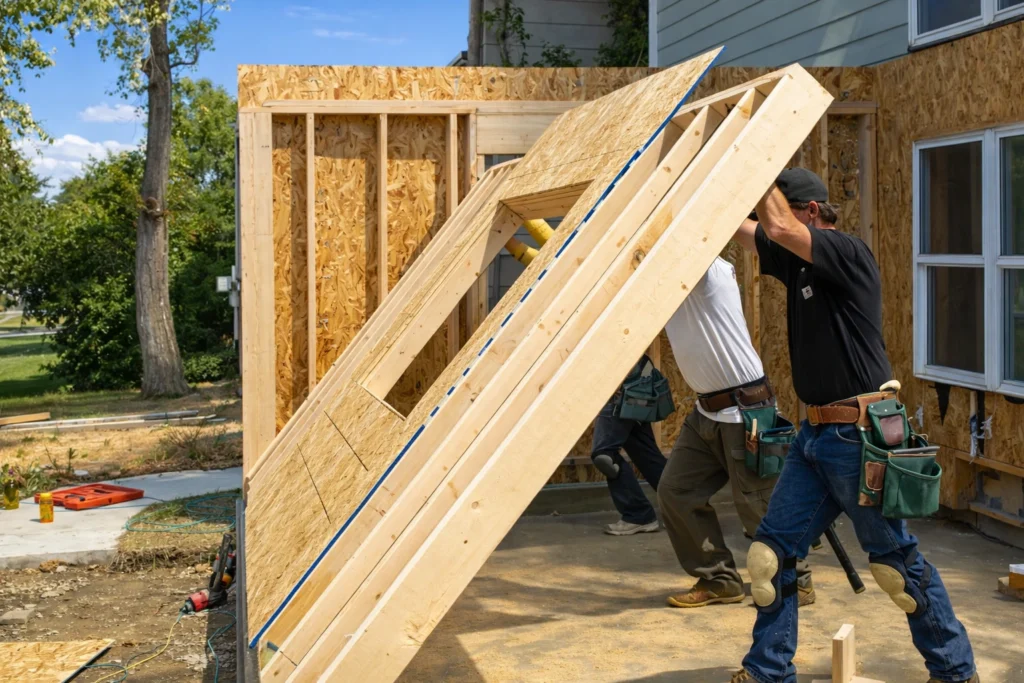
To put real numbers behind the range, here’s a representative scope from an active project in Bridgewater — a split-level home where the owners needed a primary suite and wanted to build up rather than out.
Project scope: ~1,000 sq ft second-level addition including a master bedroom, walk-in closet, primary bath with steam shower, and laundry. New HVAC zone, electrical subpanel, plumbing rough-in.
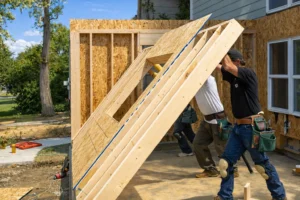
Framing time: Six days for 1,000 sq ft of new framing — that’s the pace when a crew knows what they’re doing and materials are staged properly.
Total timeline: Several months from permit to punch list, accounting for the municipal approval process, inspection scheduling, and homeowner material selections (tile, fixtures, flooring). For the phase-by-phase version, see what to expect during a home addition in NJ.
Lesson from this project: The homeowners had already worked with an architect and came to us with drawings. That accelerated the estimate process significantly and meant there were no scope ambiguities going into the contract. If you’re earlier in the process, that’s fine — we can point you toward architects we’ve worked with in your area — but having plans in hand is a meaningful head start.
What Should Be in Your Estimate (And What Often Isn’t)
The biggest source of surprise on addition projects isn’t the work itself — it’s what a proposal does and doesn’t include.
A complete estimate should itemize:
- Structural work — framing, any engineering coordination
- Mechanical — HVAC extension or new zone, electrical, plumbing rough-in if applicable
- Exterior finish — roofing, siding, windows, doors
- Interior finish — insulation, drywall, flooring, trim, paint
- Permit fees — pulled by the GC, not handed to you as a surprise
- Site cleanup and debris removal
What should be explicitly excluded and priced separately if needed:
- Architect / design fees (if you don’t already have plans)
- Structural engineering (if required — it often is)
- Specialty materials sourced outside the standard supply chain
- Furnishings, appliances, and fixtures you purchase independently
- Any work in adjacent rooms tied in as a scope add
A proposal that says “home addition, approximately $X” without line items is a signal, not a quote. You can’t manage a budget you can’t read.
The Timeline Reality
A home addition in New Jersey runs longer than homeowners typically expect. Here’s why.
Permit approval is not in your contractor’s control. Once an application is filed, the building department’s timeline is the building department’s timeline. Some municipalities in Morris County move faster than others in Essex or Bergen. Plan for permit approval to take several weeks at minimum, and budget for the possibility of a revision cycle.
Material decisions affect schedule. When you’re choosing shingles, flooring, tile, or fixtures, the timeline pauses until those selections are made. Materials with lead times — custom windows, specialty tile, out-of-state sourced products — need to be ordered early. A GC who doesn’t flag this before the project starts is setting you up for a frustrating mid-project conversation.
You may need to be out of the house for a stretch. Not for the whole project — but during certain phases, particularly when structural work is happening near your living space or when HVAC is being cut in, it’s cleaner and faster if the house is empty for a week or two. This is common on second-level additions. It’s not a failure of planning; it’s just the reality of building above a home you’re living in.
Red Flags When Collecting Estimates
A few things to watch for as you talk to contractors:
An unusually low per-sq-ft number. Below $175/sq ft for a full addition in NJ in 2026 is either missing scope or too good to be true. Ask what’s included.
No permit discussion. Any addition requires permits. A contractor who doesn’t bring it up in the first conversation either doesn’t pull them or doesn’t plan to.
Vague proposal language. “Addition per agreed scope” is not a contract. You want line items you can read and ask questions about.
No mention of what’s excluded. The exclusions matter as much as the inclusions. A proposal that doesn’t list them is assuming you won’t ask.
No site visit before the estimate. You can’t estimate an addition accurately from a phone call. If a contractor sends a number without seeing the existing structure, that number will change.
How to Plan Your Budget
A realistic budgeting approach for a Northern NJ addition:
1. Start with square footage.
Use $200–$400/sq ft as your working range. A 500 sq ft addition is a $100,000–$200,000 project at that range.
2. Add design fees if you don’t have plans.
Architect fees for an addition design typically run 10–15% of construction cost. For a $200K project, budget $20,000–$30,000 for design, engineering, and permit drawings if you’re starting from scratch.
3. Hold a contingency.
A 10–15% contingency on the construction budget is standard practice for additions. Existing conditions — old wiring, unexpected framing issues, moisture — surface during demo.
4. Separate what you purchase from what the contractor provides.
If you’re sourcing your own fixtures, tile, or appliances, that cost is yours to track alongside the contract value.
5. Get the proposal before you finalize the number.
The estimate is a starting point. The itemized proposal after a site visit and scope confirmation is your actual budget anchor.
Is an Addition Worth It in NJ?
In most Northern New Jersey markets — Morristown, Bridgewater, Basking Ridge, Verona, Cedar Grove, Warren, Westfield — the answer is usually yes, if the addition is well-scoped and professionally executed.
The math: moving in NJ means transaction costs (real estate commissions, transfer taxes, closing costs) that often run 8–10% of purchase price, plus the premium you’ll pay to buy more space in the same school district. A well-built addition typically returns significant value at resale and — more importantly — gives you the space you need in a neighborhood you already know.
The alternative to a good addition isn’t staying small. It’s a larger project done poorly, which costs the same money and leaves you with a house that doesn’t work.
Talk to a Contractor Before You Decide
Numbers are useful until they’re not. The real answer to “what will my addition cost?” comes after a site visit, a scope conversation, and a detailed proposal — not a calculator.
If you’re in Northern New Jersey — Essex, Bergen, Morris, Union, or Somerset County — and you’re thinking seriously about an addition, reach out for a free estimate. We’ll walk the site, talk through what you’re trying to accomplish, and give you a clear, itemized number you can actually use.